Peshawar is the capital and largest city of Khyber Pakhtunkhwa, with a population of over 1.9 million (2023 census). It lies in the broad Valley of Peshawar, just east of the historic Khyber Pass, and has been a gateway between South and Central Asia for more than two thousand years.
One of the oldest continuously inhabited cities in South Asia, Peshawar today is a busy centre of trade, learning and medicine — and the host city of POSPCON 2027 at Khyber Medical College.
The city’s recorded history begins as Purushapura, a Sanskrit name usually translated as “City of Men”, in the ancient region of Gandhara. Under the Kushan emperor Kanishka it became an imperial capital and a great centre of Buddhist learning, home to the Kanishka Stupa, which was among the tallest buildings of the ancient world.
Mahmud of Ghazni took the city in 1001, and it later became an important trading post on the Grand Trunk Road under the Mughals; the present name is attributed to the emperor Akbar. In the eighteenth century Peshawar was the winter capital of the Durrani Afghan kings, whose residence was the Bala Hissar Fort. The city passed to the Sikh Empire in the early nineteenth century and to the British in 1849, becoming the capital of the North-West Frontier Province in 1901. Since 1947 it has been a provincial capital of Pakistan.
The “Storytellers’ Bazaar” at the heart of the old walled city, where traders and travellers once gathered to exchange tales.
The hilltop fort that served as the royal residence of the Durrani kings, overlooking the old city.
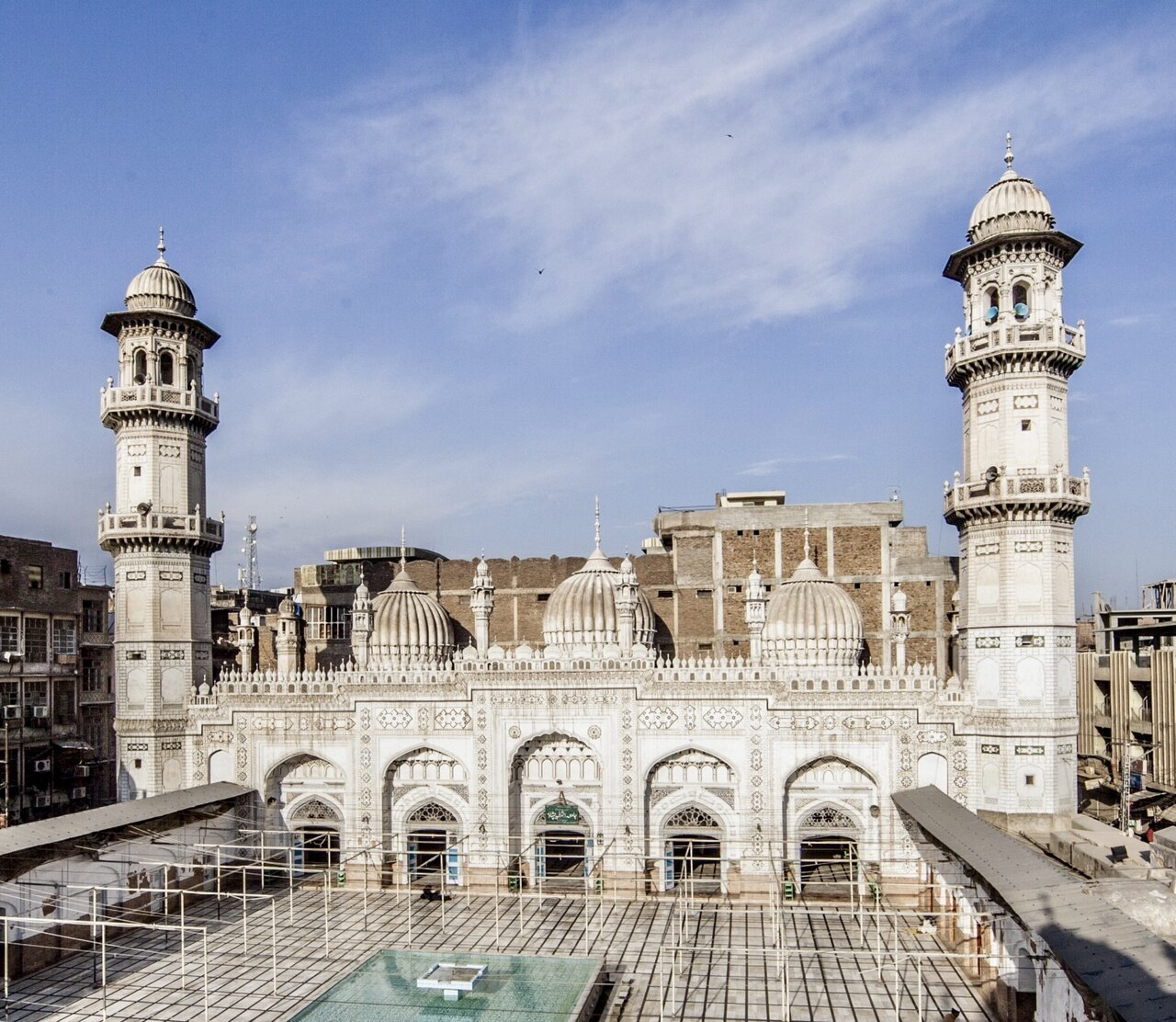
A Mughal-era mosque of 1630 with a white marble façade, named after the governor who built it.
A quarter of merchant houses built in a Central Asian style, known for their carved wooden interiors.
Housed in the Victoria Hall of 1906, with one of the finest collections of Gandharan Buddhist art.
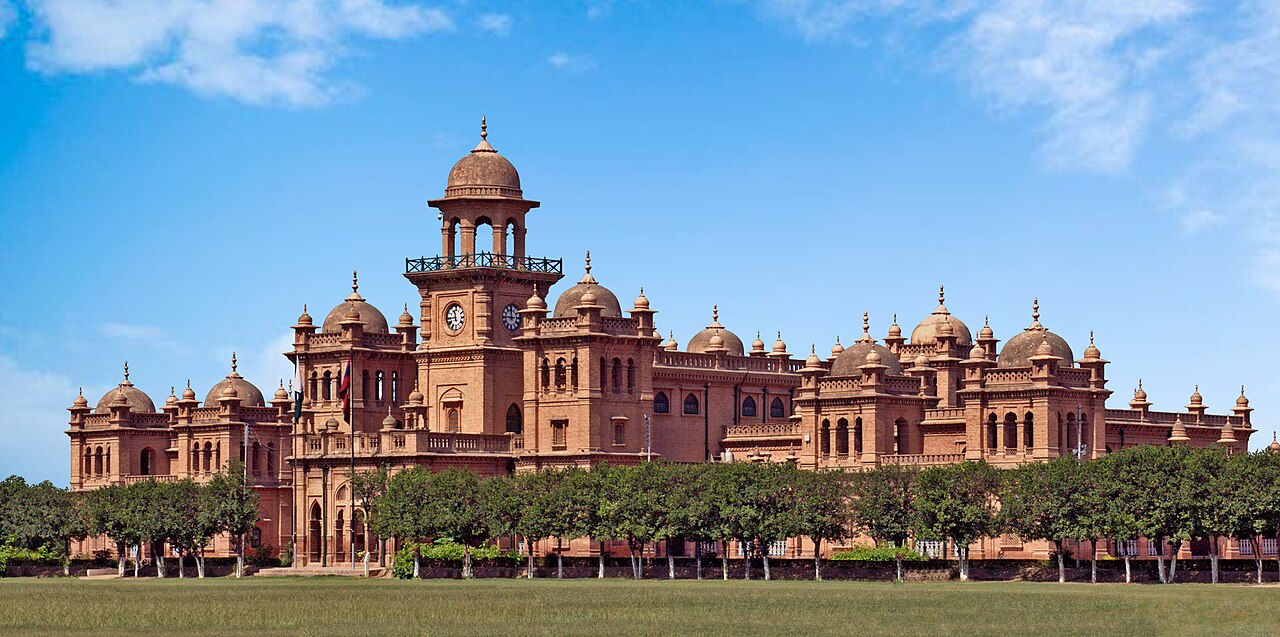
Founded in 1913, its Indo-Saracenic buildings are among the most recognisable in the country.
The “Ghanta Ghar”, a British-era clock tower built for Queen Victoria’s jubilee, in the middle of the old bazaars.
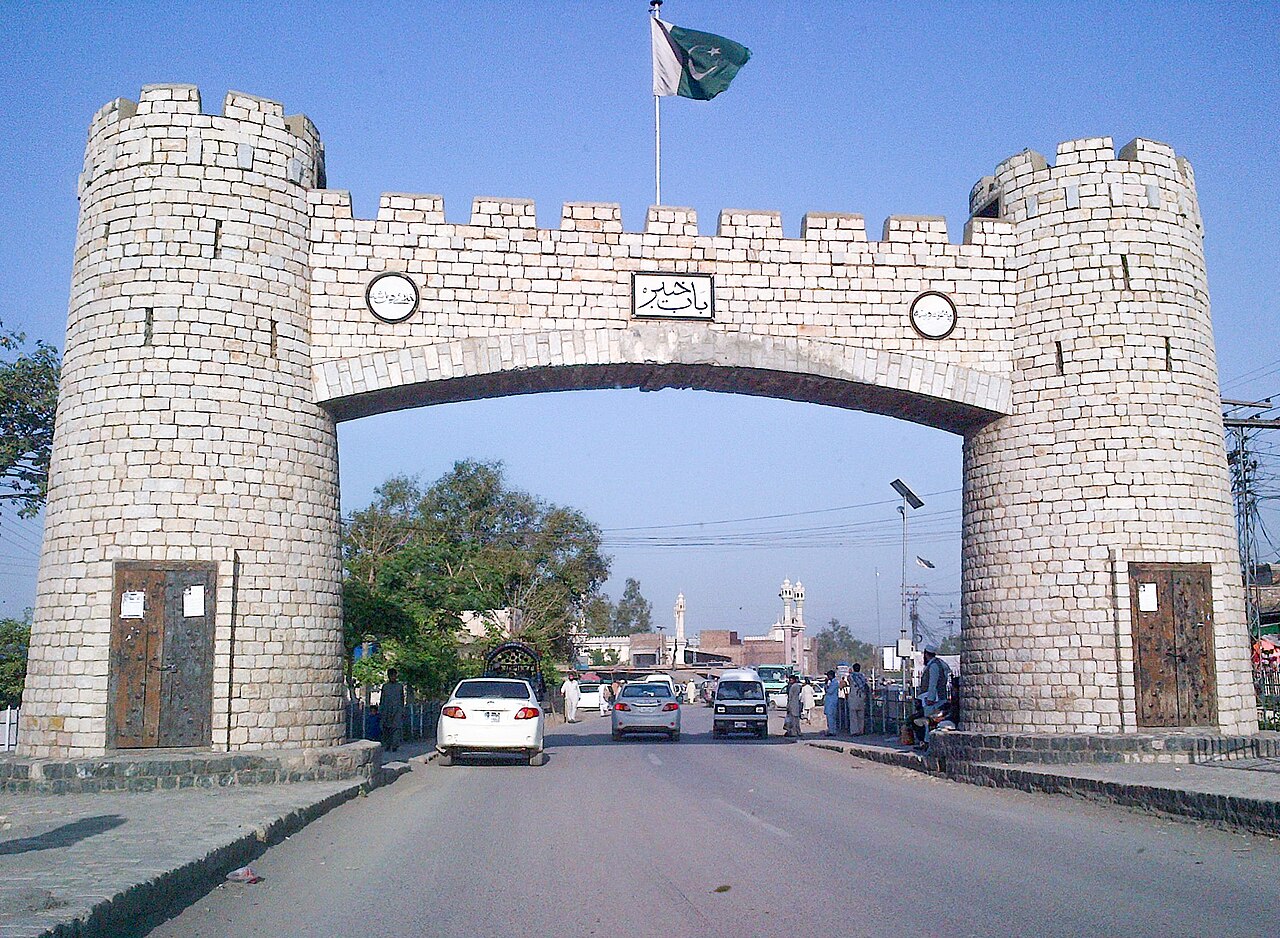
The monumental gateway at Jamrud, just west of the city, marking the start of the Khyber Pass.
Text adapted from “Peshawar” on Wikipedia, used under CC BY-SA 4.0. Photos from Wikimedia Commons: Islamia College by Zafarmaini (CC BY-SA 4.0); Mahabat Khan Mosque by US Embassy Pakistan (public domain); Bab-e-Khyber by Muhammad Imran Saeed (CC BY 2.5).